Hidden Experiences You Can Enjoy Around Kumbhalgarh - Rawla Sagrun’s Stories
Most visitors give Kumbhalgarh two hours: walk the wall, watch the light-and-sound show, and leave. That skips the wolves, the working artisan villages, and a cave temple reached by 500 steps into a gorge. Staying at Rawla Sagrun on Fort Road puts all of it within a short drive which is what makes it the best place to stay in Kumbhalgarh if you want more than a photo at the gate.
Kumbhalgarh Wildlife Sanctuary Safari: What's Beyond the Fort Walls
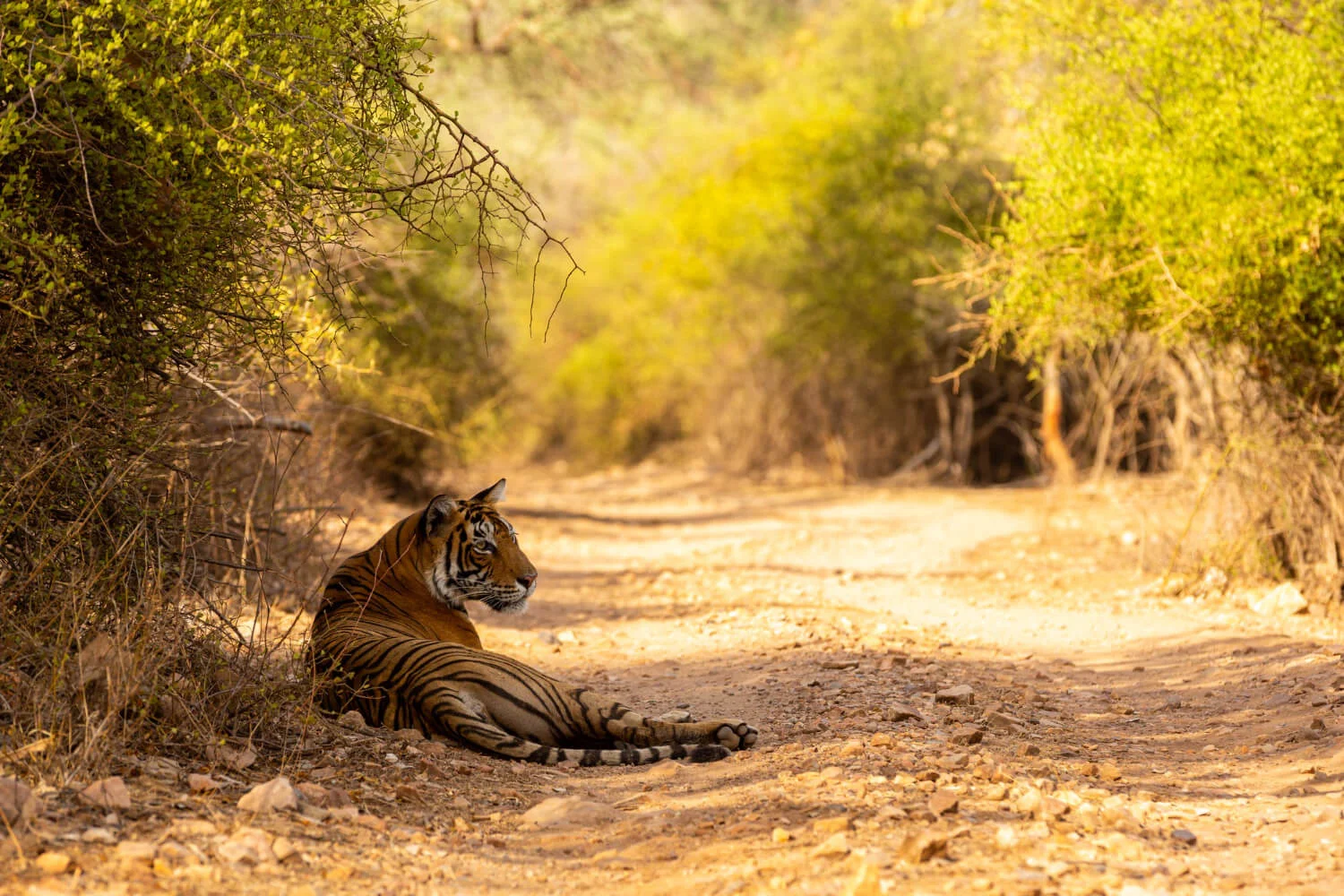
The sanctuary surrounds the fort across roughly 578 sq km of Aravalli forest, spilling into Rajsamand, Pali, and Udaipur districts. Jeep safaris are the standard way in; treks and horseback routes cover ground vehicles can't.
Wildlife you can realistically spot:
| Species | How commonly sighted |
|---|---|
| Nilgai, chinkara | Frequent open grassland stretches |
| Jungle cat, hyena | Occasional best on early jeep safaris |
| Leopard | Rare, elusive sightings are never guaranteed |
| Indian wolf | Rare pack sightings reported in winter months |
| Birdlife (200+ species) | Frequent year-round, best just after monsoon |
Safari tips:
- Book the earliest morning slot animals move before the heat, and jeep queues build up fast.
- The forest is greenest August–September (post-monsoon); animal visibility is better October–March.
- No sighting is guaranteed and treat this as a forest experience, not a zoo visit.
- Carry binoculars if you have them most sightings happen at a distance across open grassland, not up close.
- Neutral-coloured clothing helps; bright colours are more likely to startle birds and smaller mammals before you get a good look.
The sanctuary was once the private hunting ground of Mewar's royal family before it was declared a protected wildlife sanctuary in 1971, and that history still shapes how it feels today, wide, quiet, and largely undeveloped compared to more commercialised safari parks. It also holds a distinction few visitors know about: Kumbhalgarh is one of the only sanctuaries in India where wolf breeding has been successfully sustained in the wild, with a known pack concentrated around the Joba area. Guides here tend to know individual trails and water points rather than working off a fixed script, which is part of why an early, unhurried safari tends to beat a rushed one.
Kelwara Village Market Life Near the Best Place to Stay in Kumbhalgarh
Kelwara is the gateway village to Kumbhalgarh Fort, and its lanes have supplied the fort community for centuries. Potters, hand-loom weavers, and silver artisans work here for local buyers first, tourists second.
What to look for:
- Hand-block printed textiles and turbans
- Leather goods made for daily use, not display
- Tribal silver jewellery, priced by weight rather than design
Prices are set for locals, so mild bargaining is normal. Staying at the best place to stay in Kumbhalgarh means this is a pre-dinner walk, not a planned excursion.
Kelwara sits at the base of the fort's hill, which is precisely why it grew into a supply town in the first place traders, craftsmen, and provisioners needed a base outside the fort walls, and much of that working character has survived. Evenings are the best time to walk it: shopkeepers are less rushed, and the light along the main lane turns the sandstone buildings a warmer colour that's easy to miss at midday.
Rajasthani Artisan Villages and Craft Stops Around Kumbhalgarh
Smaller hamlets beyond Kelwara still treat pottery and weaving as household work rather than a staged demonstration.
- Pottery clusters visit mornings to see wheels turning, not just finished stock
- Hand-loom weaving produces the coarser cotton and wool used in everyday Rajasthani dress
- Home silver workshops ask the price basis before assuming a piece is overpriced
- Etiquette ask before photographing anyone at work; buy direct from the artisan where possible
These villages aren't signposted. Ask a local driver or the resort's front desk for directions.
What makes these hamlets worth the detour is continuity rather than novelty; the techniques haven't changed much because there's been no commercial pressure to change them. A potter working a manual wheel here isn't performing tradition for an audience; it's simply how the work gets done. That's a different experience from a craft demonstration built for tour groups, and it's worth setting expectations accordingly: some visits will be quiet and undramatic, which is part of the point.
Mammadev Temple and Neelkanth Mahadev : Kumbhalgarh's Overlooked Shrines
Most visitors never leave the main fort courtyard, so they miss two sites worth the extra half hour:
| Site | What it is | Why it's overlooked |
|---|---|---|
| Mammadev Temple | Crypt beneath the fort, built in 1460, containing four inscribed slabs tracing Mewar's history. | Underground and not on the main walking route. |
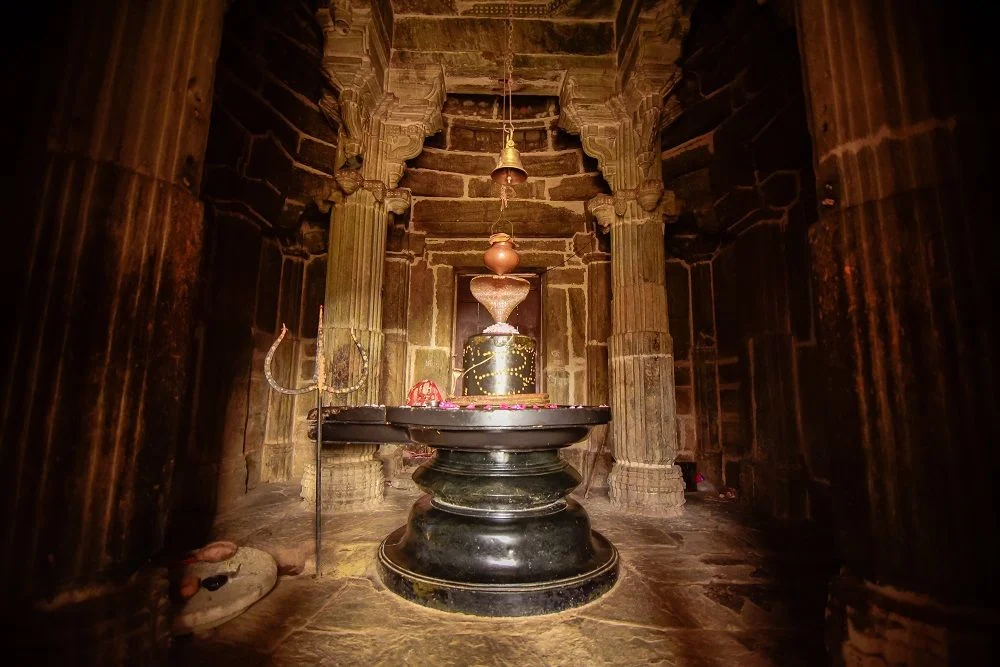
| Neelkanth Mahadev | Six-foot stone Shivling carved from a single rock. | Sits apart from the main fort circuit. |
Both fit into a fort visit if you allot extra time instead of heading straight for the ramparts.
The Mammadev crypt is easy to walk past because nothing about its entrance announces its age; there's no grand doorway, just a descent into a cool, dim space that feels more like an archive than a temple. Reading the inscribed slabs slowly, even without translating every word, gives a more direct sense of Mewar's history than most museum placards manage. Neelkanth Mahadeo, by contrast, is a working shrine rather than a historical curiosity, and it's worth visiting with the same quiet you'd bring to any active place of worship.
Sunset Points and Stargazing Spots in the Aravalli Hills Around Kumbhalgarh
Badal Mahal, the Palace of Clouds at the fort's highest point, is the established sunset spot.
- Arrive 45 minutes before sunset for golden light on the walls and hills
- Arrive later and you're leaving with the crowd instead of watching the colour change
- Winter evenings give the clearest views
Stargazing doesn't need a marked spot. Kumbhalgarh sits well outside city lights, so a clear night from the resort grounds or a quiet stretch of Fort Road usually works. Winter nights, when the air is driest, give the sharpest skies.
There's a practical reason Badal Mahal works so well at sunset: it's the highest point on the fort, so the light hits the surrounding hills before it fades at ground level, giving a longer golden window than you'd get from the valley floor. If you'd rather skip the walk back down in near-darkness, carry a torch or a phone flashlight; the fort's paths aren't lit once the light show crowd has cleared out.
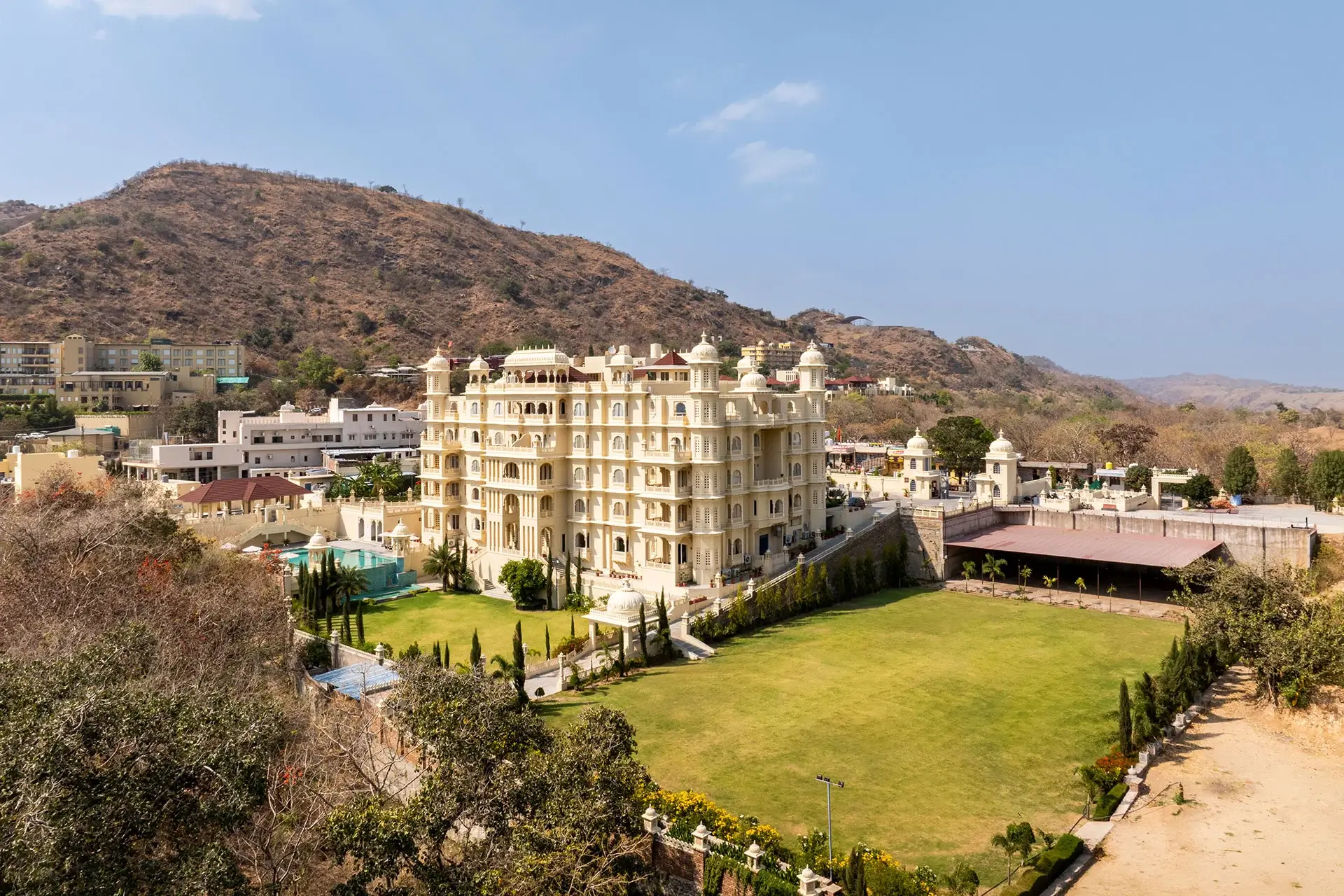
Rawla Sagrun: A Kumbhalgarh Fort Hotel Built for This Kind of Exploring
Rawla Sagrun sits on Fort Road, close enough to the fort and sanctuary that none of the above needs a long transfer.
- Heritage architecture with lawns built for both leisure stays and events
- On-site restaurant serving Indian, Italian, and Mediterranean food
- Front-desk staff who know current gate timings, trail conditions, and which excursions suit the day's weather information a same-day visitor from Udaipur won't have
As a Kumbhalgarh Fort hotel, its value isn't just the address, it's the local knowledge that comes with staying close.
That proximity also changes how a trip is paced. Instead of one long day trying to fit in the fort, a safari, and a village walk before driving back to Udaipur, staying on Fort Road means each excursion can be planned around the best time of day for it an early safari, a midday break, and an evening sunset climb rather than around a return drive.
Resting Between Excursions at a Hotel in Kumbhalgarh with Swimming Pool
April to June heat makes back-to-back excursions harder than the itinerary suggests. A hotel in Kumbhalgarh with a swimming pool isn't a luxury add-on here; it's what makes a second outing that day realistic.
- Pool break between a morning safari and an evening sunset climb
- Garden space to slow down before the next excursion
- For families, a midday pool break keeps kids willing to do one more temple or market visit
The heat in this part of Rajasthan builds quickly once the sun is fully up, and it's easy to underestimate how much a morning safari or a fort walk takes out of you until the afternoon arrives. A pool isn't just comfort here, it's what lets an itinerary hold together across a full day instead of collapsing into an early return to the room.
Rajasthani Food Worth Trying Around Kumbhalgarh
The food here is as much a part of the region as the fort, and it's easy to skip if you stick to the resort restaurant every meal.
- Dal baati churma baked wheat rolls (baati) crushed and soaked in ghee, served with lentils and a sweet crumbled wheat-jaggery churma. This is the dish most associated with rural Mewar and worth trying at least once at a local dhaba in Kelwara.
- Bajra roti with garlic chutney is a millet flatbread that's a staple in Aravalli villages, denser and earthier than wheat roti.
- Ghewar is a disc-shaped, honeycomb-textured sweet soaked in sugar syrup, traditionally made around festivals but available year-round in Rajasthan.
A dhaba meal in Kelwara after a market walk pairs naturally with the village visit you're already there, and it's a more honest read on regional food than a resort buffet alone.
Rural Mewar cooking leans on what keeps well in a dry climate lentils, millet, ghee, and dried spices rather than the fresh vegetables more common in wetter parts of India. That's not a limitation so much as a different logic: dishes like dal baati churma were built for a lifestyle where food had to travel or store easily, and the flavour reflects that practicality rather than any attempt at refinement for its own sake.
Getting Around: Logistics for Exploring Beyond the Fort
None of these hidden experiences require specialised transport, but a little planning saves time on the ground.
- A car with a driver is the easiest way to cover the sanctuary, Kelwara, and Parshuram Mahadev in one trip; most Fort Road properties, including Rawla Sagrun, can arrange one or point you to a reliable local operator.
- Self-drive workable for Kelwara and the fort itself, but the roads toward smaller artisan hamlets and the Parshuram Mahadev trailhead aren't always clearly marked, so a driver who knows the area is genuinely useful there.
- Safari booking jeep safaris into the sanctuary are arranged through the forest department counter near the entrance; booking a day ahead during the October–March peak season avoids a long wait.
- Mobile network coverage thins out near the cave temple gorge and deeper sanctuary trails, so download offline maps before you set out.
None of this logistics planning needs to happen weeks in advance; most of it can be sorted the evening before with the resort's front desk, which typically has a working relationship with local drivers and safari operators. The one exception is peak-season safari slots, which are worth locking in a day ahead rather than assuming a same-morning booking will go through.
Best Time of Year for Hidden Experiences Around Kumbhalgarh
| Season | Conditions | Best for |
|---|---|---|
| Oct–Mar | Cool, dry, clear skies | Safaris, treks, sunset views, stargazing |
| Jul–Sep | Lush, occasional waterfalls near cave temple | Greenery, photography trails can be slippery |
| Apr–Jun | Hot, especially midday | Early-morning/late-evening excursions only; plan pool breaks |
None of these seasons rule out a visit entirely; they just change how the day should be structured. A winter trip lets you move at a normal pace from morning to evening, while a summer one works better if you treat the middle of the day as downtime rather than fighting the heat to fit in one more stop.
Kumbhalgarh Hidden Experiences at a Glance
| Experience | Distance from Rawla Sagrun | Best Time | What to Expect |
|---|---|---|---|
| Wildlife sanctuary safari | ~5 km | Early morning, Oct–Mar | Jeep or trek, sightings not guaranteed |
| Kelwara market & artisan lanes | ~5 km | Late afternoon | Textiles, leather, silver |
| Mammadev Temple & Neelkanth Mahadev | Within fort complex, ~5 km | Morning, with fort visit | Crypt inscriptions, stone Shivling |
| Badal Mahal sunset point | ~5 km | 45 min before sunset | Golden-hour views over the Aravallis |
| Parshuram Mahadev cave temple | ~11 km | Cooler months | ~500-step descent into a gorge |
| Stargazing | On-site | Clear winter nights | No marked spot needed |
Laid out this way, it's clear that none of these experiences require a special trip of their own; they sit close enough together that a two- or three-night stay can realistically cover most of the list without feeling rushed.
Conclusion
Kumbhalgarh rewards travellers who stay more than an afternoon. The fort brings people in; the sanctuary, artisan villages, and overlooked temples are what they remember. Basing yourself at the best place to stay in Kumbhalgarh means the difference between checking a box and actually seeing the place book two nights, and build in a pool break for the afternoon you'll need it.
FAQs About Staying Near Kumbhalgarh Fort
What makes Rawla Sagrun the best place to stay in Kumbhalgarh for exploring beyond the fort?
Its Fort Road location keeps the sanctuary, Kelwara market, and the fort's temples within a short drive, so more than one experience fits into a day.
How far is Kumbhalgarh Wildlife Sanctuary from hotels near the fort?
Roughly 5 km from Fort Road properties about a 10–15 minute drive.
Does Rawla Sagrun have a swimming pool?
Yes. As a hotel in Kumbhalgarh with a swimming pool and garden, it's useful for recovering between excursions.
Is the Parshuram Mahadev temple trek difficult?
You'll descend around 500 steps into a gorge moderately strenuous, not difficult. Comfortable shoes and water are enough.
What is the best season for these hidden experiences?
October to March, for clear skies, cooler trekking conditions, and better wildlife visibility.
Can I visit Kelwara's artisan villages without a guide?
Yes, though a local driver or the front desk can point you to smaller hamlets that aren't signposted.
Is Kumbhalgarh a good base for families?
Yes the sanctuary, market walks, and pool downtime add enough variety that the trip doesn't feel like one long history lesson.
